From one-off guarantees to sustainable lending
Meera Siva and Srinivas Ramanujam
Credit guarantees work. They bring lenders to the table, unlock loans and channel capital to enterprises that need it. But one-off deals do little to change lenders’ behavior across the rest of their portfolios, limiting any lasting shift in how capital flows to underserved enterprises.
After a decade of catalytic capital deployment in the form of guarantees, the credit gap for small enterprises is still gaping. The playbook has been to describe the same structural failures (commercial lenders won’t price the risk, enterprises can’t access growth capital, and impact is stranded), and then to respond with more philanthropic funds in the form of grants, recoverable grants or patient equity. The incentive structures have made it more comfortable to think of how to deploy the next tranche than to think of what happens the day after the programs end.
The role of catalytic funds for guarantees points to something uncomfortable. A 2024 FERDI study on DFI lending programs in Africa found that banks that received guarantee backing often only reshuffled existing portfolios toward borrowers who the program supported. They did not add new lending, mostly because the guarantee improves the deal economics without changing the lender’s long-term institutional incentives.
Clearly, financial incentives alone do not change lender behavior. They change lender volume. That is not the same thing. This trap is common for guarantee structures. When guarantees are done deal-by-deal, lenders take the transaction in front of them without changing anything in their back-end systems. The next enterprise that is very similar will still face the familiar rejection. The same applies if guarantees are provided at the portfolio level: There is no systemic change.
A better model
What actually changes lender behavior at an institutional level is three interventions working together:
Financial protection with a first-loss guarantee to make a loan viable is necessary, but not sufficient.
The borrower also needs some backstop. Technical assistance that strengthens financial literacy, governance systems and business capacity directly improves lender confidence in repayment.
It is also critical to systematically review data and engage with multiple lending partners so that underwriting systems are updated. Changing the model requires data and recalibrating risk metrics based on that data.
There is already good evidence on what strengthens the most important factor that impacts lender behavior — enterprise success. An assessment of 656 SMEs in 2025 by Aceli Africa compared those that received advisory support on growth strategy, financial planning and cash flow management with those that only received capital. The results showed that advisory support correlates with better commercial outcomes such as stronger revenue improvements and confidence in managing future financing.
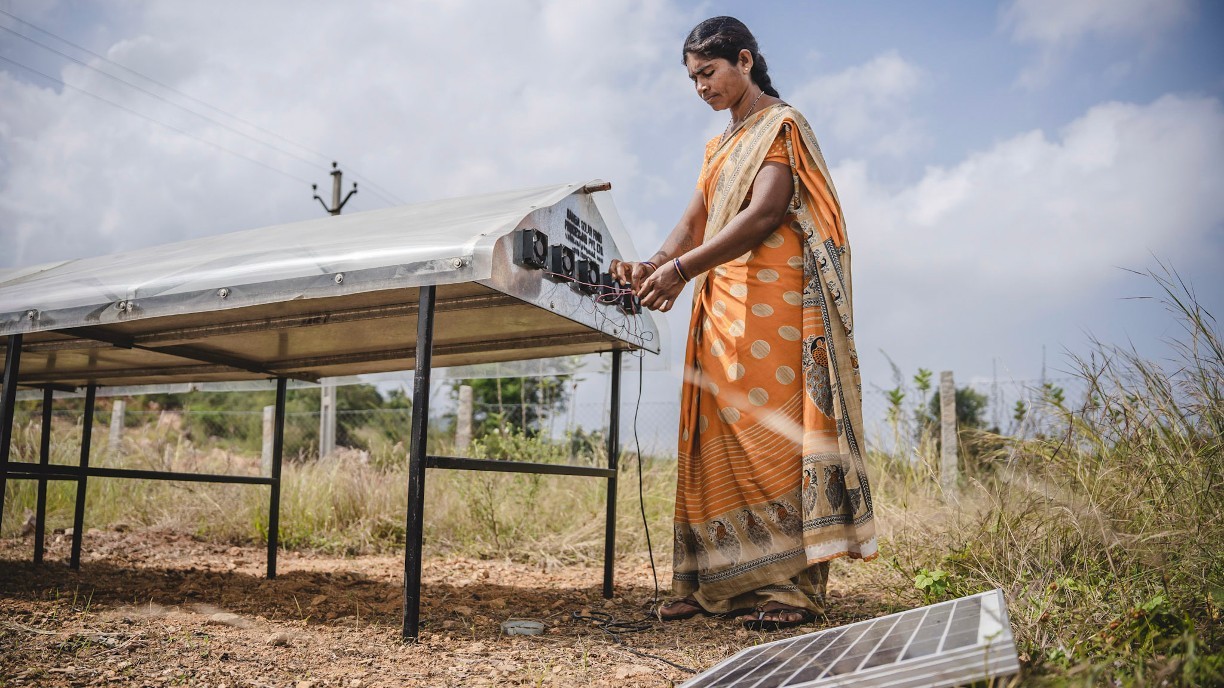
Our teams at Inkludo Impact Foundation and Villgro Innovation Foundation recently demonstrated the strength of a model that integrates the three key elements: financial protection, enterprise support and risk recalibration.
In the Guarantee for Enterprise Acceleration and Resilience facility, or GEAR, Inkludo Impact Foundation provides the philanthropic capital and facility structure, while Villgro Innovation Foundation — a social enterprise accelerator in India — leads on-the-ground implementation, manages lender relationships, and delivers market infrastructure and enterprise development expertise.
Our work since 2021, while incrementally building this final structure, shows that it is possible to change underwriting practices, reduce interest rates, keep default rates low and sustain credit flow to enterprises even after guarantees end. Our pilots with four lending partners using $400,000 in philanthropic capital unlocked $1.3 million in loans for 12 enterprises and 400 end-users of their products. Defaults stayed under 5% and late payments under 10%. Enterprises also “graduated” and accessed loans from other lenders.
Importantly, lenders who started with GEAR as a hedged transaction continued to reduce the guarantee cover needed over time. In some instances, interest rates were lowered once they had confidence in the enterprise. Several lenders continued to lend to the enterprises without any guarantee backing.
We are now scaling GEAR beyond its pilot phase. But the fact is that scale requires philanthropic capital patient enough to fund a few loan cycles, not just a single guarantee. Lender partners must be willing to share repayment data transparently across the portfolio. And the facility itself needs a local partner with genuine relationships with enterprises and lenders. The Lemelson Foundation, which provided catalytic capital for the pilots, chose this architecture because it offered a credible pathway to graduate enterprises into ongoing borrowers and to sunset the facility when the market matures.
What scaling requires, in short, is catalytic capital redesigned as market infrastructure — patient enough to build track records, deliberate enough to share them and structured to change what commercial finance is willing to do permanently.
A guarantee is an access pass, not a membership. For too long, the field has been issuing passes in the name of market development. Now we are building the membership infrastructure: the track records, the data and the lender relationships that turn a one-time exception into a standing invitation.
(This article was published in ImpactAlpha on April 4, 2026)
" height="39.997200000000014px" id="c7taZDl_g" width="39.99719999999991px"/><path d="M 4.497 0 C 5.69 0 6.834 0.474 7.678 1.317 C 8.521 2.161 8.995 3.305 8.995 4.497 L 8.995 9.744 L 5.996 9.744 L 5.996 4.497 C 5.996 4.1 5.839 3.718 5.557 3.437 C 5.276 3.156 4.895 2.998 4.497 2.998 C 4.1 2.998 3.718 3.156 3.437 3.437 C 3.156 3.718 2.998 4.1 2.998 4.497 L 2.998 9.744 L 0 9.744 L 0 4.497 C 0 3.305 0.474 2.161 1.317 1.317 C 2.161 0.474 3.305 0 4.497 0 Z" fill="transparent" height="9.744300000000003px" id="T3uLNsg3z" stroke-dasharray="" stroke-linecap="round" stroke-linejoin="round" stroke-width="1.49912" stroke="rgb(243, 46, 200)" transform="translate(18.5 17)" width="8.994699999999995px"/><path d="M 2.998 0 L 0 0 L 0 8.995 L 2.998 8.995 Z" fill="transparent" height="8.994700000000002px" id="z3i_It9d6" stroke-dasharray="" stroke-linecap="round" stroke-linejoin="round" stroke-width="1.49912" stroke="rgb(243, 46, 200)" transform="translate(12.503 17.75)" width="2.9983000000000004px"/><path d="M 1.499 2.998 C 2.327 2.998 2.998 2.327 2.998 1.499 C 2.998 0.671 2.327 0 1.499 0 C 0.671 0 0 0.671 0 1.499 C 0 2.327 0.671 2.998 1.499 2.998 Z" fill="transparent" height="2.9983000000000004px" id="UUvHjl6Mb" stroke-dasharray="" stroke-linecap="round" stroke-linejoin="round" stroke-width="1.49912" stroke="rgb(243, 46, 200)" transform="translate(12.503 12.503)" width="2.9983000000000004px"/></svg>)